
Classifying Plant Families: Aster/ Daisy
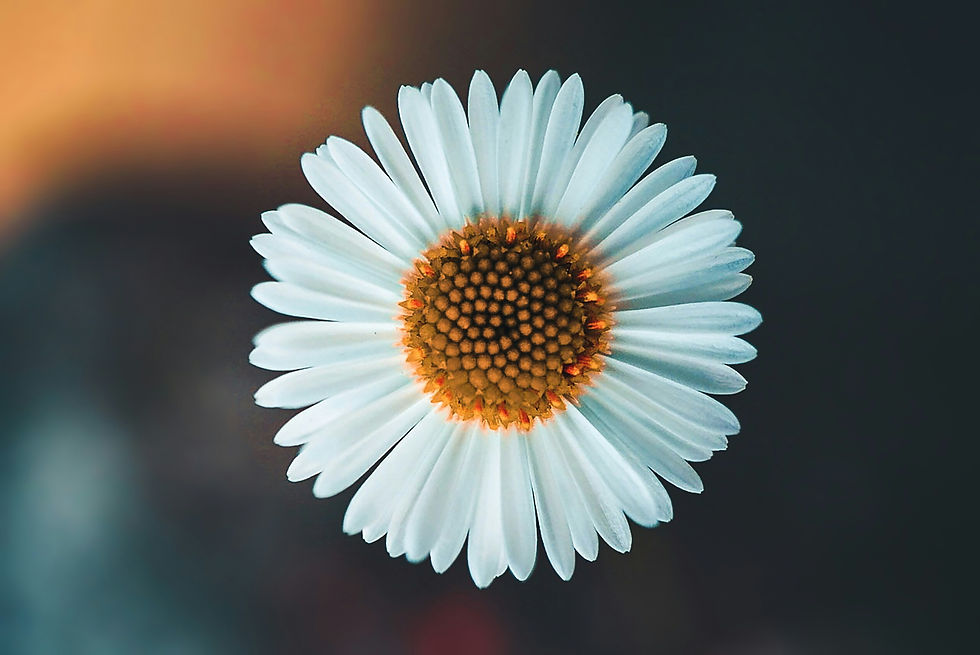
Let's talk about plant families! Starting with one of my favorites- the Asteraceae family! You may refer to it as the sunflower/Daisy or Aster/Daisy family. It's one of the largest groups of flowering plants and features flowers such as Echinacea (coneflower), Calendula, Zinnias, Marigolds, Cosmos, Chicory, Dandelion, and believe it or not, even some plants such as Yarrow, and vegetables like artichokes because of the flowers that are produced. There are well over 30,000 different species of plants that exist within this family!
Key Characteristics When Identifying This Plant Family:
Plants that belong to the Asteraceae family are most obviously known for their flowers but we have to pay attention to the main determining factor being that it will typically be flower head that can look like one flower but may actually be a cluster a many small flowers grouped together. They are composite flowers! Each petal is actually an individual flower called a ray and they each have one seed connected to the flower head- Much like a sunflower- each seed produces it's own ray floret- I'll post an anatomy photo for reference.

Common Medicinal Properties:
The purpose of a plant family can be beneficial for the purpose of identifying plants in the wild not only by appearance but by medicinal benefits. When you find an flower in the Aster/Daisy family based on characteristics alone, you may not know exactly what you're interacting with, but you can at the very least identify that it likely holds anti-inflammatory, antioxidant, and immune boosting properties. Some may be anti-septic and anti-bacterial like yarrow, which we know is excellent for healing bug bites, wounds, cuts, burns, etc. Some may have properties that aid in circulation and heart health like the dandelion. Some plants may have diuretic/ detoxing properties. Some may be used for calming the nervous system and aiding digestion, like Chamomile. Or, it may aid in immune system building and protection, like Echinacea! You may even come across a super plant that does all of the above, like Calendula ( one of my favorites and most commonly used in my apothecary). It is important to know plant knowledge of course, however, in a crunch, you may use these characteristics and properties to make an educated guess on what herbs can aid on site. Always use your best judgement and if something feels off, it probably is. Your instincts are also a reliable and powerful source.
Invasive? or Abundant.
I tend to despise how herbs in abundance are classified as invasive over abundant. We are often told that many of the plants that belong to this category are invasive species that can kill our gardens. We've been made to see them as unattractive and an eye sore to our yards and fields and pluck them to discard of them as opposed to healing with them. When you see an overgrowth of Dandelion or Chicory in your neighborhood, I challenge you to look at is as a gift from the earth. Just like how a mothers breasts will produce milk because of the synchronicities between mother and child having an effect on her mammary glands as a result to supply and demand, Mother Earth provides us everything we need a similar synchrony. It's also why when you are exposed to a plant that may be poisonous to your body, the antidote plant will be growing somewhere near by. It's because the mother knows. There is a supply and demand for healing and there is enough to go around. You are not being invaded, you are being provided for!


Comments